







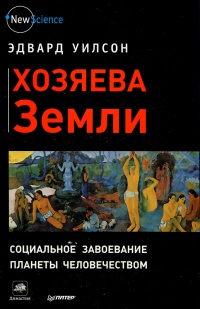
Будущее Земли. Наша планета в борьбе за жизнь - Эдвард Уилсон
Книгу Будущее Земли. Наша планета в борьбе за жизнь - Эдвард Уилсон читаем онлайн бесплатно полную версию! Чтобы начать читать не надо регистрации. Напомним, что читать онлайн вы можете не только на компьютере, но и на андроид (Android), iPhone и iPad. Приятного чтения!
294 0 16:03, 25-05-2019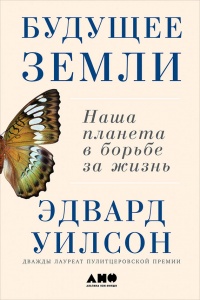
Книга Будущее Земли. Наша планета в борьбе за жизнь - Эдвард Уилсон читать онлайн бесплатно без регистрации
17. Пробуждение
Andersen, D. 20i4. Letter dated August i2, цитируется с разрешения автора.
Millennium Ecosystems Assessment. 2005. Ecosystems and Human Well Being, Synthesis. Summary for Decision Makers, 24 pp.
Running, S. W. 2012. A measurable planetary boundary for the biosphere. Science 337 (6101): 1458–1459.
18. Восстановление
Finch, W., et al. 2012. Longleaf, Far as the Eye Can See (Chapel Hill, NC: University of North Carolina Press).
Hiss, T. 2014. Can the world really set aside half the planet for wildlife? Smithsonian 45 (5): 66–78.
Hughes, B. B., et al. 2013. Recovery of a top predator mediates negative trophic effects on seagrass. Proceedings of the National Academy of Sciences U. S. A. 110 (38): 15313–15318.
Krajick, K. 2005. Winning the war against island invaders. Science 310 (5753): 1410–1413.
Tallamy, D. W. 2007. Bringing Nature Home: How You Can Sustain Wildlife with Native Plants (Portland, OR: Timber Press).
Wilkinson, T. 2013. Last Stand: Ted Turner's Quest to Save a Troubled Planet (Guilford, CT: Lyons Press).
Wilson, E. O. 2014. A Window on Eternity: A Biologist's Walk Through Gorongosa National Park (New York: Simon & Schuster).
Woodworth, P. 2013. Our Once and Future Planet: Restoring the World in the Climate Change Century (Chicago: University of Chicago Press).
Zimov, S. A. 2005. Pleistocene park: Return of the mammoth's ecosystem. Science 308 (5723): 796–798.
19. Пол-Земли: как спасти биосферу
Gunter, M. M., Jr. 2004. Building the Next Ark: How NGOs Work to Protect Biodiversity (Lebanon, NH: University Press of New England).
Hiss, T. 2014. Can the world really set aside half the planet for wildlife? Smithsonian 45 (5): 66–78.
Jenkins, C. N., et al. 2015. US protected lands mismatch biodiversity priorities. Proceedings of the National Academy of Sciences U. S. A. 112 (16): 5081–5086.
Noss, R. F., A. P. Dobson, R. Baldwin, P. Beier, C. R. Davis, D. A. Dellasala, J. Francis, H. Locke, K. Nowak, R. Lopez, C. Reining, S. C. Trombulak, and G. Tabor. 2011. Bolder thinking for conservation. Conservation Biology 26 (1): 1–9.
Soule, M. E., and J. Terborgh, eds. 1999. Continental Conservation: Scientific Foundations of Regional Networks (Washington, DC: Island Press).
Steffen, W., et al. 2015. Planetary boundaries: Guiding human development on a changing planet. Sciencexpress, January 15, pp. 1–17.
20. В поисках выхода из тупика
Aamoth, D. 2014. The Turing test. Time Magazine, June 23.
Blewett, J., and R. Cunningham, eds. 2014. The Post-Growth Project: How the End of Economic Growth Could Bring a Fairer and Happier Society (London: Green House).
Bourne, J. K., Jr. 2015. The End of Plenty (New York: W. W. Norton).
Bradshaw, C. J. A., and B. W. Brook. 20i4. Human population reduction is not a quick fix for environmental problems. Proceedings of the National Academy of Sciences U. S. A. 111 (46): 16610–16615.
Brown, L. R. 2011. World on Edge: How to Prevent Environmental and Economic Collapse (New York: W. W. Norton).
Brown, L. R. 2012. Full Planet, Empty Plates: The New Geopolitics of Food Scarcity (New York: W. W. Norton).
Callaway, E. 2013. Synthetic biologists and conservationists open talks. Nature 496 (7445): 281.
Carrington, D. 2014. World population to hit 11bn in 2100 — with 70% chance of continuous rise. The Guardian, September 18.
Cohen, J. E. 1995. How Many People Can the Earth Support? (New York: W. W. Norton).
Dehaene, S. 2014. Consciousness and the Brain: Deciphering How the Brain Codes Our Thoughts (New York: Viking).
Eckersley, P., and A. Sandberg. 2013. Is brain emulation dangerous? J. Artificial General Intelligence 4 (3): 170–194.
Emmott, S. 2013. Ten Billion (New York: Random House).
Eth, D., J.-C. Foust, and B. Whale. 2013. The prospects of whole brain emulation within the next half-century. J. Artificial General Intelligence 4 (3): 130–152.
Frey, G. B. 2015. The end of economic growth? Scientific American 312 (1): 12.
Garrett, L. 2013. Biology's brave new world. Foreign Affairs, Nov-Dec.
Gerland, P., et al. 2014. World population stabilization unlikely this century. Science 346 (6206): 234–237.
Graziano, M. S. A. 2013. Consciousness and the Social Brain (New York: Oxford University Press).
Grossman, L. 2014. Quantum leap: Inside the tangled quest for the future of computing. Time, February 6.
Hopfenberg, R. 2014. An expansion of the demographic transition model: The dynamic link between agricultural productivity and population. Biodiversity 15 (4): 246–254.
Klein, N. 2014. This Changes Everything (New York: Simon & Schuster).
Koene, R., and D. Deca. 2013. Whole brain emulation seeks to implement a mind and its general intelligence through systems identification. J. Artificial General Intelligence 4 (3): 1–9.
Palfrey, J., and U. Gasser. 2012. Interop: The Promise and Perils of Highly Interconnected Systems (New York: Basic Books).
Pauwels, E. 2013. Public understanding of synthetic biology. BioScience 63 (2): 79–89.
Saunders, D. 2010. Arrival City: How the Largest Migration in History Is Reshaping Our World (New York: Pantheon).
Schneider, G. E. 2014. Brain Structure and Its Origins: In Development and in Evolution of Behavior and the Mind (Cambridge, MA: MIT Press).
Thackray, A., D. Brock, and R. Jones. 20i5. Moore's Law: The Life of Gordon Moore, Silicon Valley's Quiet Revolutionary (New York: Basic Books).
The Economist. 2014. The future of jobs. January 18.
The Economist. 2014. DIY chromosomes. March 29.
The Economist. 2014. Rise of the robots. March 29 — April 4.
United Nations. 2012. World Population Prospects (New York: United Nations).
Venter, J. C. 2013. Life at the Speed of Light: From the Double Helix to the Dawn of Digital Life (New York: Viking).
Weisman, A. 2013. Countdown: Our Last, Best Hope for a Future on Earth? (New York: Little, Brown).
Wilson, E. O. 2014. A Window on Eternity: A Biologist's Walk Through Gorongosa National Park (New York: Simon & Schuster).
Zlotnik, H. 2013. Crowd control. Nature 501 (7465): 30–31.
21. Что делать?
Balmford, A., et al. 2004. The worldwide costs of marine protected areas. Proceedings of the National Academy of Sciences U. S. A. 101 (26): 9694–9697.
Прочитали книгу? Предлагаем вам поделится своим отзывом от прочитанного(прослушанного)! Ваш отзыв будет полезен читателям, которые еще только собираются познакомиться с произведением.
Уважаемые читатели, слушатели и просто посетители нашей библиотеки! Просим Вас придерживаться определенных правил при комментировании литературных произведений.
- 1. Просьба отказаться от дискриминационных высказываний. Мы защищаем право наших читателей свободно выражать свою точку зрения. Вместе с тем мы не терпим агрессии. На сайте запрещено оставлять комментарий, который содержит унизительные высказывания или призывы к насилию по отношению к отдельным лицам или группам людей на основании их расы, этнического происхождения, вероисповедания, недееспособности, пола, возраста, статуса ветерана, касты или сексуальной ориентации.
- 2. Просьба отказаться от оскорблений, угроз и запугиваний.
- 3. Просьба отказаться от нецензурной лексики.
- 4. Просьба вести себя максимально корректно как по отношению к авторам, так и по отношению к другим читателям и их комментариям.
Надеемся на Ваше понимание и благоразумие. С уважением, администратор LoveRead.info.
Оставить комментарий
-
 Валентина04 июль 13:25
Большое спасибо за интересную тему. Сюжет заманчиввй,интересный. Жду продолжения ...
Лекарь Фамильяров. Том 7 - Александр Лиманский
Валентина04 июль 13:25
Большое спасибо за интересную тему. Сюжет заманчиввй,интересный. Жду продолжения ...
Лекарь Фамильяров. Том 7 - Александр Лиманский
-
Наталья По01 июль 10:12
Ужасный перевод:(...
Аркадия - Эрин Дум
-
Вика29 июнь 21:56
Какая хрень с первых строк. У ребенка в 14 месяце не может быть черепно мозговой травмы при падании с дивана ...
Вернуть семью любой ценой - Чарли Ви