






Первопонятия. Ключи к культурному коду - Михаил Наумович Эпштейн
Книгу Первопонятия. Ключи к культурному коду - Михаил Наумович Эпштейн читаем онлайн бесплатно полную версию! Чтобы начать читать не надо регистрации. Напомним, что читать онлайн вы можете не только на компьютере, но и на андроид (Android), iPhone и iPad. Приятного чтения!
167 0 09:00, 19-02-2023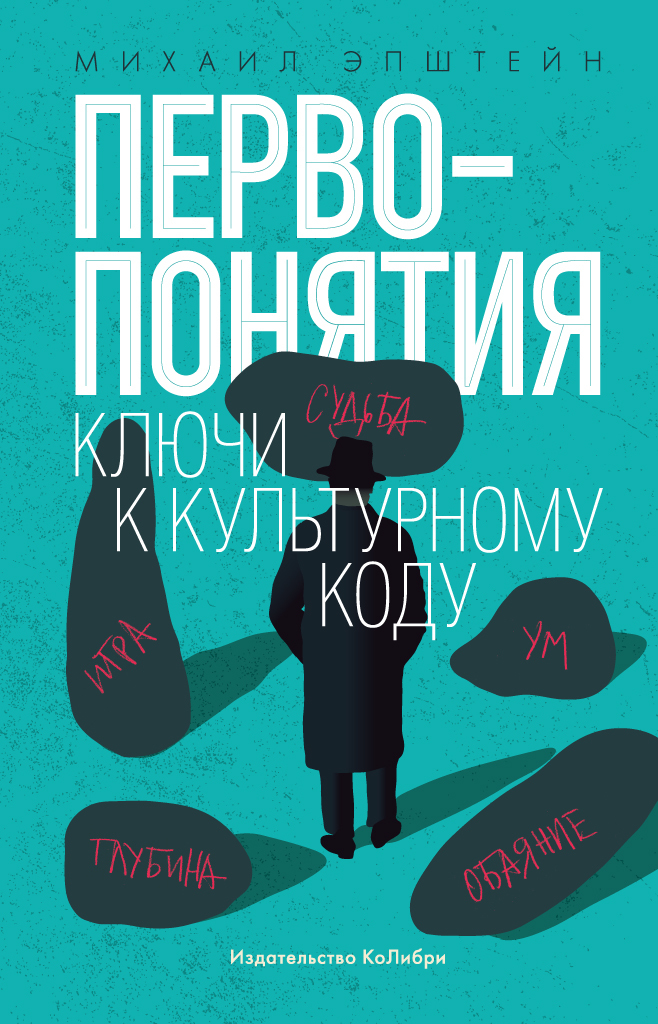
Книга Первопонятия. Ключи к культурному коду - Михаил Наумович Эпштейн читать онлайн бесплатно без регистрации
В книге рассматриваются основополагающие для культурного кода первопонятия – своего рода общечеловеческие универсалии, которые широко употребляются, но с трудом поддаются определению и однозначному толкованию. Речь идет, например, о жизни и судьбе, о любви и желании, о смерти и бессмертии, о власти и народе, о реальном и возможном. Автор ставит перед собой задачу раскрыть игру каждого понятия, богатство его смыслов, его ментальный горизонт, многообразие контекстов, куда оно может быть вписано. Для этого привлекается широкий круг философских источников и приводится множество примеров из художественной литературы. Эти предельно емкие по смыслу единицы языка и мысли обладают властью над общественным сознанием и определяют бытие человека в культуре.Михаил Наумович Эпштейн – российско-американский философ, культуролог, литературовед, лингвист, эссеист, лауреат премий Андрея Белого, Лондонского института социальных изобретений, Международного конкурса эссеистики (Берлин—Веймар), Liberty (Нью-Йорк). Профессор университета Эмори (США), автор более тридцати книг и множества статей и эссе, переведенных на двадцать четыре иностранных языка.В формате PDF A4 сохранен издательский макет книги.
✓ Бессмертие, Вера, Возможное, Интересное, Ничто, Событие, Творчество, Удивление
Summary
What, then, is time? If no one asks me, I know what it is. If I wish to explain it to him who asks, I do not know.
This book is devoted to the main concepts that shape our mentality: life and death, love and fate, soul and body, power and play, wisdom and conscience, future and eternity… These universal elements of conceptualization underlie such cognitive processes as inference, memory, learning, decision-making, and goal-setting. Primary concepts – which are concise in expression, but extremely capacious in meaning – have power over the public consciousness and form the sign code of culture. The minimal sign construct, a single word, encompasses the maximum of mental content; the greatest is manifested in the least. With these concepts, we express our understanding of the world – but they themselves, by virtue of their breadth and depth, are the most difficult to understand or explicate. As alluded to in the epigraph, they seem self-explanatory, and precisely for this reason, they elude definition.
As Socrates said, “The unexamined life is not worth living.” This book is intended for anyone who wants to master the language of concepts in order to more fully comprehend their own existence. Primary concepts are ancient, universal thought-formations. They could perhaps be called “arche-concepts,” by analogy with Jungian archetypes; but unlike the latter, primary concepts belong to the sphere of the collective consciousness rather than the unconscious. They are anthropological universals – primary elements of human experience, diversely refracted through national languages and cultures. The universality of these concepts, however, is not of an abstract nature, as in the case of such metaphysical or logical categories as “essence,” “quantity,” “quality,” “identity,” “difference,” “unity,” “multitude,” etc. Primary concepts are more concrete in meaning, and evolve not as a result of logical analysis, but as the most vital, profoundly meaningful elements of the human experience. At the same time, primary concepts differ from such scientific notions as “quantum,” “galaxy,” “gene,” or “organism,” many of which are international terms derived from Greek or Latin. By contrast, primary concepts are most often derived from native roots, since they belong to the consciousness of an entire people. Unlike scientific terms, which are reducible to one rigorous meaning, they stand out as polysemic, and enjoy the broadest use in various styles, from colloquial to academic. The smallest units of intellectial energy, they designate the ultimate values and purposes of existence.
Such is the task of this book: to explore the capacious significance of these primary concepts, the meanings they derive from their linguistic origin and acquire in the context of modern culture. The book contains a systematic description of sixty concepts that cover the main aspects of human life: from phenomena of nature and society to subjective moods and emotions. The concepts are thematically organized around several major themes: Life, Reality, the Human, Feeling, Mind, Power, and Creativity.
1. Life
Life
Fate
Event
The New
Future
Age
Death
Immortality
Eternity
2. Reality
Reality
The Possible
Miracle
Depth
Shell
The Small
Thing
House
Void
Nothing
3. The Human
The Human
Soul
Conscience
Faith
Guilt
Body
Purity
Lightness
Charm
Vulgarity
The Uncanny
4. Feeling
Feeling
Love
Desire
Jealousy
Mood
Sadness
Longing
Resentment
Surprise
Tenderness
5. Mind
Mind
Insanity
Consciousness
Thinking
Wisdom
6. Power
Power
People
Intelligentsia
Motherland
7. Creativity
Creativity
Genius
The Interesting
The Poetic
Play
Image
Word
Silence
Writing
Reading
Book
Each concept is presented as a point of departure for different cultural trends, philosophical views, and critical interpretations. Arranged in alphabetical order throughout the book, the concepts are cross-referenced at the end of each entry with related concepts (see → sign).
This book follows the pattern of such well-known anthologies of concepts as Aldous Huxley’s The Perennial Philosophy (1945) and Raymond Williams’s Keywords: A Vocabulary of Culture and Society (1976). However, this book is not intended to outline a particular theme or worldview (whether a mystical philosophy or politics of culture), but rather to frame the issue itself of concepts as instruments of intellectual creativity. What problems and riddles do they pose to our thought-process, what explosive paradoxes do they encompass, and what theories and hypotheses evolve from them?
The author is the well-known Russian-American cultural scholar, critical thinker, and linguist Mikhail N. Epstein, professor of Cultural Theory and Russian Literature at Emory University (Atlanta, US). This book is the result of his many years of multidisciplinary work on issues of language and thought. His other books include A Constructive Dictionary of the Humanities, From Knowledge to Creativity, Poetry and Superpoetry, Postmodernism in Russia, The Phoenix of Philosophy, Ideas against Ideocracy, and a number of monographs and articles translated into twenty-four languages.
Примечания
1
Характерно признание одного из самых разносторонних российских ученых XX в. Н. Н. Моисеева, специалиста в области математики, теории управления, динамики биосферы, философии естествознания: «О том, что такое жизнь, написано множество работ, но ни в одной из них нет достаточно полного определения этого феномена. <…> Я тоже не могу дать определение феномена жизни, и, как мне кажется, его удовлетворительного и достаточно полного определения просто не существует. Но в то же время мы всегда можем отличить живое от неживого». Моисеев Н. «Жизнь» – еще одно «первопонятие» //

Прочитали книгу? Предлагаем вам поделится своим отзывом от прочитанного(прослушанного)! Ваш отзыв будет полезен читателям, которые еще только собираются познакомиться с произведением.
Уважаемые читатели, слушатели и просто посетители нашей библиотеки! Просим Вас придерживаться определенных правил при комментировании литературных произведений.
- 1. Просьба отказаться от дискриминационных высказываний. Мы защищаем право наших читателей свободно выражать свою точку зрения. Вместе с тем мы не терпим агрессии. На сайте запрещено оставлять комментарий, который содержит унизительные высказывания или призывы к насилию по отношению к отдельным лицам или группам людей на основании их расы, этнического происхождения, вероисповедания, недееспособности, пола, возраста, статуса ветерана, касты или сексуальной ориентации.
- 2. Просьба отказаться от оскорблений, угроз и запугиваний.
- 3. Просьба отказаться от нецензурной лексики.
- 4. Просьба вести себя максимально корректно как по отношению к авторам, так и по отношению к другим читателям и их комментариям.
Надеемся на Ваше понимание и благоразумие. С уважением, администратор LoveRead.info.
Оставить комментарий

-
 Наталья По01 июль 10:12
Ужасный перевод:(...
Аркадия - Эрин Дум
Наталья По01 июль 10:12
Ужасный перевод:(...
Аркадия - Эрин Дум
-
Вика29 июнь 21:56
Какая хрень с первых строк. У ребенка в 14 месяце не может быть черепно мозговой травмы при падании с дивана ...
Вернуть семью любой ценой - Чарли Ви
-
Ксения24 июнь 18:50
Очень понравился цикл книг "В самом сердце стужи". Интересная история, написанная с огромным вниманием к деталям. Не избитый...
В самом Сердце Стужи. Том VII - Александр Якубович