








Быть собой: новая теория сознания - Анил Сет
Книгу Быть собой: новая теория сознания - Анил Сет читаем онлайн бесплатно полную версию! Чтобы начать читать не надо регистрации. Напомним, что читать онлайн вы можете не только на компьютере, но и на андроид (Android), iPhone и iPad. Приятного чтения!
368 0 18:13, 10-03-2024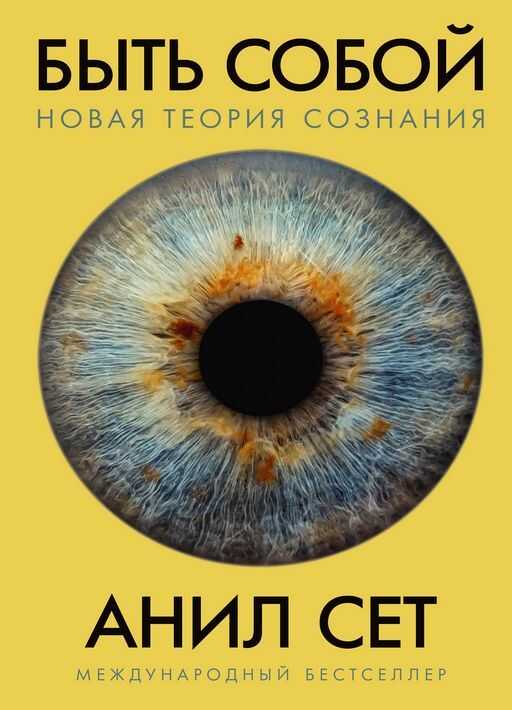
Книга Быть собой: новая теория сознания - Анил Сет читать онлайн бесплатно без регистрации
Что значит «быть собой» — то есть обладать сознательным восприятием окружающего мира и себя в нем? Трудно представить вопрос более захватывающий и трудноразрешимый. Человечество привыкло считать природу сознания предметом преимущественно философских споров, однако современная наука уже выстраивает убедительные биологические теории, объясняющие существование «я». В своей книге профессор нейробиологии Анил Сет приоткрывает окно внутрь нашего сознания и выдвигает радикально новую теорию, согласно которой мы воспринимаем мир не объективно — таким, какой он есть на самом деле, — а непрерывно выстраиваем его в прогнозах и каждую микросекунду корректируем ошибки прогнозирования. Бросая вызов нашим представлениям о восприятии и действительности, теория Анила Сета играет для нейронауки такую же роль, какую сыграла для эволюционной биологии теория Докинза.
Frith, C. D. (2007). Making Up the Mind: How the Brain Creates Our Mental World. Oxford: Wiley-Blackwell.
Gallagher, S. (2008). 'Direct perception in the intersubjective context'. Consciousness and Cognition, 17(2), 535–43.
Gallese, V., Fadiga, L., Fogassi, L., et al. (1996). 'Action recognition in the premotor cortex'. Brain, 119 (Pt 2), 593–609.
Gallup, G. G. (1970). 'Chimpanzees: self-recognition'. Science, 167, 86–7.
Gallup, G. G., & Anderson, J. R. (2018). 'The "olfactory mirror" and other recent attempts to demonstrate self-recognition in non-primate species'. Behavioural Processes, 148, 16–19.
Gallup, G. G., & Anderson, J. R. (2020). 'Self-recognition in animals: Where do we stand fifty years later? Lessons from cleaner wrasse and other species'. Psychology of Consciousness: Theory, Research, and Practice, 7(1), 46–58.
Gasquet, J. (1991). Cézanne: A Memoir with Conversations. London: Thames & Hudson Ltd.
Gehrlach, D. A., Dolensek, N., Klein, A. S., et al. (2019). 'Aversive state processing in the posterior insular cortex'. Nature Neuroscience, 22(9), 1424–37.
Gibson, J. J. (1979). The Ecological Approach to Visual Perception. Hillsdale, NJ: Lawrence Erlbaum.
Gidon, A., Zolnik, T. A., Fidzinski, P., et al. (2020). 'Dendritic action potentials and computation in human layer 2/3 cortical neurons'. Science, 367(6473), 83–7.
Gifford, C., & Seth, A. K. (2013). Eye Benders: The Science of Seeing and Believing. London: Thames & Hudson.
Ginsburg, S., & Jablonka, E. (2019). The Evolution of the Sensitive Soul: Learning and the Origins of Consciousness. Cambridge, MA: MIT Press.
Godfrey-Smith, P. G. (1996). 'Spencer and Dewey on life and mind'. In M. Boden (ed.), The Philosophy of Artificial Life, Oxford: Oxford University Press, 314–31.
Godfrey-Smith, P. G. (2017). Other Minds: The Octopus, the Sea, and the Deep Origins of Consciousness. New York: Farrar, Strauss, and Giroux. (Годфри-Смит П. Чужой разум: Осьминоги, море и глубинные истоки сознания. — М.: АСТ, 2020.)
Goff, P. (2019). Galileo's Error: Foundations for a New Science of Consciousness. London: Rider.
Gombrich, E. H. (1961). Art and Illusion: A Study in the Psychology of Pictorial Representation. Ewing, NJ: Princeton University Press.
Goodstein, D. L. (1985). States of Matter. Chelmsford, MA: Courier Corporation.
Gregory, R. L. (1980). 'Perceptions as hypotheses'. Philosophical Transactions of the Royal Society B: Biological Sciences, 290(1038), 181–97.
Grill-Spector, K., & Malach, R. (2004). 'The human visual cortex'. Annual Review of Neuroscience, 27, 649–77.
Haggard, P. (2008). 'Human volition: towards a neuroscience of will'. Nature Reviews Neuroscience, 9(12), 934–46.
Haggard, P. (2019). 'The neurocognitive bases of human volition'. Annual Review of Psychology, 70, 9–28.
Hanlon, J., & Messenger, J. B. (1996). Cephalopod Behaviour. Cambridge: Cambridge University Press.
Harding, D. E. (1961). On Having No Head. London: The Shollond Trust.
Harris, S. (2012). Free Will. New York: Deckle Edge.
Harrison, N. A., Gray, M. A., Gianaros, P. J., et al. (2010). 'The embodiment of emotional feelings in the brain'. Journal of Neuroscience, 30(38), 12878–84.
Harvey, I. (2008). 'Misrepresentations'. In S. Bullock, J. Noble, R. Watson, et al. (Eds.), Artificial Life Xi: Proceedings of the 11th International Conference On the Simulation and Synthesis of Living Systems (pp. 227–33). Cambridge, MA: MIT Press.
Hatfield, G. (2002). Descartes and the Meditations. Abingdon: Routledge.
Haun, A. M. (2021). 'What is visible across the visual field?' Neuroscience of Consciousness.
Haun, A. M., & Tononi, G. (2019). 'Why does space feel the way it does? Towards a principled account of spatial experience'. Entropy, 21(12), 1160.
He, K., Zhang, X., Ren, S., et al. (2016). 'Deep residual learning for image recognition'. In 2016 IEEE Conference on Computer Vision and Pattern Recognition (CVPR).
Heilbron, M., Richter, D., Ekman, M., et al. (2020). 'Word contexts enhance the neural representation of individual letters in early visual cortex'. Nature Communications, 11(1), 321.
Herculano-Houzel, S. (2009). 'The human brain in numbers: a linearly scaled-up primate brain'. Frontiers in Human Neuroscience, 3, 31.
Herculano-Houzel, S. (2016). The Human Advantage: A New Understanding of How Our Brain Became Remarkable. Cambridge, MA: MIT Press.
Hochner, B. (2012). 'An embodied view of octopus neurobiology'. Current Biology, 22(20), R887–92.
Hoel, E. P., Albantakis, L., & Tononi, G. (2013). 'Quantifying causal emergence shows that macro can beat micro'. Proceedings of the National Academy of Sciences of the USA, 110(49), 19790–5.
Hoffman, D. (2019). The Case against Reality: Why Evolution Hid the Truth from Our Eyes. London: W. W. Norton & Company.
Hoffman, D., Singh, M., & Prakash, C. (2015). 'The interface theory of perception'. Psychonomic Bulletin and Review, 22, 1480–1506.
Hohwy, J. (2013). The Predictive Mind. Oxford: Oxford University Press. Hohwy, J. (2014). 'The self-evidencing brain'. Nous, 50(2), 259–85.
Hohwy, J. (2020a). 'New directions in predictive processing'. Mind and Language. 35(2), 209–23.
Hohwy, J. (2020b). 'Self-supervision, normativity and the free energy principle'. Synthese. doi:10.1007/s11229-020-02622-2.
Hohwy, J., & Seth, A. K. (2020). 'Predictive processing as a systematic basis for identifying the neural correlates of consciousness'. Philosophy and the Mind Sciences, 1(2), 3.
Hurley, S., & Noë, A. (2003). 'Neural plasticity and consciousness'. Biology and Philosophy, 18, 131–68.
Husserl, E. (1960 [1931]). Cartesian Meditations: An Introduction to Phenomenology. The Hague: Nijhoff. (Гуссерль Э. Картезианские медитации. — М.: Академический проект, 2010.)
Inagaki, K., & Hatano, G. (2004). 'Vitalistic causality in young children's naive biology'. Trends in Cognitive Sciences, 8(8), 356–62.
James, W. (1884). 'What is an emotion?'. Mind, 9(34), 188–205. James, W. (1890). The Principles of Psychology. New York: Henry Holt.
Jao Keehn, R. J., Iversen, J. R., Schulz, I., et al. (2019). 'Spontaneity and diversity of movement to music are not uniquely human'. Current Biology, 29(13), R621–R622.
Jensen, F. V. (2000). Introduction to Bayesian Networks. New York: Springer.
Jensen, M. P., Jamieson, G. A., Lutz, A., et al. (2017). 'New directions in hypnosis research: strategies for advancing the cognitive and clinical neuroscience of hypnosis'. Neuroscience of Consciousness, 3(1), nix004.
Kail, P. J. E. (2007). Projection and Realism in Hume's Philosophy. Oxford: Oxford University Press.
Kandel, E. R. (2012). The Age of Insight: The Quest to Understand the Unconscious in Art, Mind, and Brain, from Vienna 1900 to the Present. New



Прочитали книгу? Предлагаем вам поделится своим отзывом от прочитанного(прослушанного)! Ваш отзыв будет полезен читателям, которые еще только собираются познакомиться с произведением.
Уважаемые читатели, слушатели и просто посетители нашей библиотеки! Просим Вас придерживаться определенных правил при комментировании литературных произведений.
- 1. Просьба отказаться от дискриминационных высказываний. Мы защищаем право наших читателей свободно выражать свою точку зрения. Вместе с тем мы не терпим агрессии. На сайте запрещено оставлять комментарий, который содержит унизительные высказывания или призывы к насилию по отношению к отдельным лицам или группам людей на основании их расы, этнического происхождения, вероисповедания, недееспособности, пола, возраста, статуса ветерана, касты или сексуальной ориентации.
- 2. Просьба отказаться от оскорблений, угроз и запугиваний.
- 3. Просьба отказаться от нецензурной лексики.
- 4. Просьба вести себя максимально корректно как по отношению к авторам, так и по отношению к другим читателям и их комментариям.
Надеемся на Ваше понимание и благоразумие. С уважением, администратор LoveRead.info.
Оставить комментарий

-
 Наталья По01 июль 10:12
Ужасный перевод:(...
Аркадия - Эрин Дум
Наталья По01 июль 10:12
Ужасный перевод:(...
Аркадия - Эрин Дум
-
Вика29 июнь 21:56
Какая хрень с первых строк. У ребенка в 14 месяце не может быть черепно мозговой травмы при падании с дивана ...
Вернуть семью любой ценой - Чарли Ви
-
Ксения24 июнь 18:50
Очень понравился цикл книг "В самом сердце стужи". Интересная история, написанная с огромным вниманием к деталям. Не избитый...
В самом Сердце Стужи. Том VII - Александр Якубович