








Конца света не будет. Почему экологический алармизм причиняет нам вред - Майкл Шелленбергер
Книгу Конца света не будет. Почему экологический алармизм причиняет нам вред - Майкл Шелленбергер читаем онлайн бесплатно полную версию! Чтобы начать читать не надо регистрации. Напомним, что читать онлайн вы можете не только на компьютере, но и на андроид (Android), iPhone и iPad. Приятного чтения!
150 0 12:00, 26-12-2022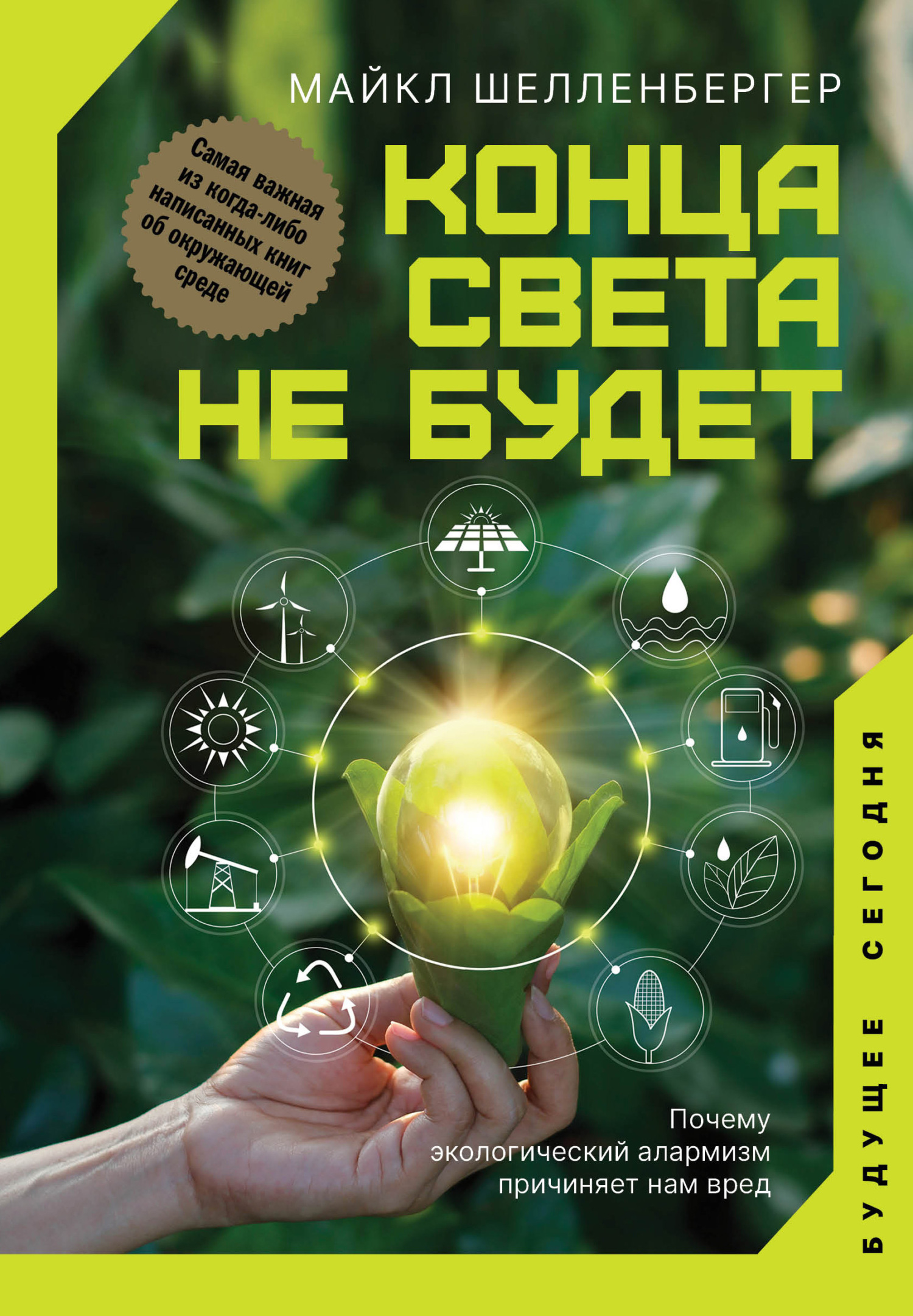
Книга Конца света не будет. Почему экологический алармизм причиняет нам вред - Майкл Шелленбергер читать онлайн бесплатно без регистрации
Хотя внимание СМИ уже несколько десятилетий подряд приковано к проблемам экологии, многие из нас до сих пор не знают основных фактов. Выбросы окиси углерода достигли пика и сокращаются в большинстве развитых стран уже более десяти лет. Смертность от экстремальных погодных явлений, даже в бедных странах, снизилась за последние 40 лет на 80 %. А риск того, что атмосфера Земли разогреется до очень высоких температур, становится все более маловероятным из-за замедления роста населения и обилия природного газа. Любопытно, что люди, которые громче всех паникуют по поводу экологических проблем, также склонны выступать против их очевидных решений. Так что же на самом деле стоит за ростом апокалиптического экологического мышления? Ответ – в книге «Конца света не будет».
285
Kunnika Changwichan, Thapat Silalertruksa, and Shabbir H. Gheewala, “Eco-Efficiency Assessment of Bioplastics Production Systems and Endof-Life Options,” Sustainability 10, no. 4 (March 2018): 952, https://doi.org/10.3390/su10040952.
286
Daniel Posen, Paulina Jaramillo, Amy E. Landis, and W. Michael Griffin, “Greenhouse Gas Mitigation for U.S. Plastics Production: Energy First, Feedstocks Later,” Environmental Research Letters 12, no. 3 (December 2017), https://doi.org/10.1088/1748-9326/aa60a7.
287
Christine Figgener (sea turtle biologist) in conversation with the author, November 6, 2019.
288
Marydele Donnelly, “Trade Routes for Tortoiseshell,” State of the World’s Sea Turtles (SWOT), Report Volume 3, February 1, 2008, https://www.seaturtlestatus.org/articles/2008/trade-routes-for-tortoiseshell. Associated Press, “Japan Agrees to End Endangered Hawksbill Turtle Imports After ’92,” Los Angeles Times, June 19, 1991, https://www.latimes.com.
289
Tina Deines, “Endangered hawksbill turtle shell trade is much bigger than scientists ever suspected,” National Geographic, March 27, 2019, https://www.nationalgeographic.com.
290
Christine Figgener (sea turtle biologist) in conversation with the author, November 6, 2019.
291
“World’s Biggest Producer of Plastic to Curtail Its Use,” Bloomberg News, January 19, 2020, https://www.bloomberg.com
292
Elizabeth Kolbert, The Sixth Extinction: An Unnatural History (New York: Henry Holt & Company, 2014), 266–267.
293
“World Is ‘on Notice’ as Major UN Report Shows One Million Species Face Extinction,” UN News, May 6, 2019, https://news.un.org/en/story/2019/05/1037941. “UN Report: Nature’s Dangerous Decline ‘Unprecedented’; Species Extinction Rates ‘Accelerating,’ ” Sustainable Development Goals, May 6, 2019, https://www.un.org/sustainabledevelopment/blog/2019/05/nature-decline-unprecedented-report.
294
“UN Report: Nature’s Dangerous Decline ‘Unprecedented.’ ”
295
“UN Report: Nature’s Dangerous Decline ‘Unprecedented.’ ”
296
Kolbert, The Sixth Extinction.
297
Luke J. Harmon and Susan Harrison, “Species Diversity Is Dynamic and Unbounded at Local and Continental Scales,” American Naturalist 185, no. 5 (2015): 584–93, https://doi.org/10.1086/680859. See also Thomas J. Stohlgren, John D. Barnett, and John T. Kartesz, “The Rich Get Richer: Patterns of Plant Invasions in the United States,” Frontiers in Ecology and the Environment 1, no. 1 (2003): 11–14, https://doi.org/10.2307/3867959. Scientists have known for decades that the evidence “overwhelmingly supports the openness of communities to new species, even at the small spatial scales where species interact and the influences of competition and resource supply should be strongest.” For a recent discussion, see Rubén G. Mateo, Karel Mokany, and Antoine Guisan, “Biodiversity Models: What If Unsaturation Is the Rule?” Trends in Ecology & Evolution 32, no. 8 (2017): 556–66, https://doi.org/10.1016/j.tree.2017.05.003.
298
Fangliang He and Stephen P. Hubbell, “Species – Area Relationships Always Overestimate Extinction Rates from Habitat Loss,” Nature 473 (2011): 368–371, https://doi.org/10.1038/nature09985.
299
Dov F. Sax, Steven D. Gaines, and James Brown, “Species Invasions Exceed Extinctions on Islands Worldwide: A Comparative Study of Plants and Birds,” The American Naturalist 160, no. 6 (2002): 766–783, https://doi.org/10.1086/343877.
300
Chris D. Thomas, “Rapid Acceleration of Plant Speciation During the Anthropocene,” Trends in Ecology & Evolution 30, no. 8 (2015): 448–455, https://doi.org/10.1016/j.tree.2015.05.009.
301
Kolbert, The Sixth Extinction, 186.
302
Ibid., 186–187.
303
Mark Sagoff, “Welcome to the Narcisscene,” Breakthrough Journal no. 9 (Summer 2018), https://thebreakthrough.org/journal/no-9-summer-2018/welcome-to-the-narcisscene.
304
The IUCN Red List of Endangered Species, https://www.iucnredlist.org.
305
The IUCN Red List of Endangered Species, https://www.iucnredlist.org.
306
The number of marina animal genera increased from 2,000 to 5,500 over 100 million years. Genus (p. genera) is the taxonomic rank above species. Marine animal fossils are hardy and easier to study, so scientists use their fossil record to approximate overall extinctions and growth in Earth’s geological history. J. J. Sepkoski, “A Compendium of Fossil Marine Animal Genera,” Bulletins of American Paleontology 363 (2002): 1–560.
307
The number of marina animal genera increased from 2,000 to 5,500 over 100 million years. Genus (p. genera) is the taxonomic rank above species. Marine animal fossils are hardy and easier to study, so scientists use their fossil record to approximate overall extinctions and growth in Earth’s geological history. J. J. Sepkoski, “A Compendium of Fossil Marine Animal Genera,” Bulletins of American Paleontology 363 (2002): 1–560.
308
Peter Brannen, “Earth Is Not in the Midst of a Sixth Mass Extinction,” The Atlantic, June 13, 2017, https://www.theatlantic.com.
309
Protected Planet Report 2018, United Nations Environment Programme, 2018, https://livereport.protectedplanet.net/pdf/Protected_Planet_Report_2018.pdf.
310
Marine Deguignet, Diego Juffe-Bignoli, Jerry Harrison et al., 2014 United Nations List of Protected Areas, United Nations Environment Programme, 2014, www.unep-wcmc.org.
311
A. J. Plumptre, S. Ayebare, D. Segan et al., “Conservation Action Plan for the Albertine Rift,” Wildlife Conservation Society and Its Partners, 2016, http://conservationcorridor.org/cpb/Plumptre_et_al_2016.pdf, 12.
312
“Living Planet Index,” 2018, Zoological Society of London and WWF, www.livingplanetindex.org.
313
Hannah Behrendt, Carole Megevand, and Klas Sander, “Deforestation Trends in the Congo Basin: Reconciling Economic Growth and Forest Protection,” Working Paper 5, “Wood-Based Biomass Energy,” Regional Commission in Charge of Forestry in Central Africa, April 2013, https://www.profor.info/sites/profor.info/files/Biomass%20Energy_Sectoral%20Report_Final%5Bweb%5D_may13_0.pdf.
314
Mark Jenkins, “Who Murdered the Virunga Gorillas?” National Geographic, July 2008, www.nationalgeographic.com.
315
Mark Jenkins, “Who Murdered the Virunga Gorillas?” National Geographic, July 2008, www.nationalgeographic.com.
316
Mark Jenkins, “Who Murdered the Virunga Gorillas?” National Geographic, July



Прочитали книгу? Предлагаем вам поделится своим отзывом от прочитанного(прослушанного)! Ваш отзыв будет полезен читателям, которые еще только собираются познакомиться с произведением.
Уважаемые читатели, слушатели и просто посетители нашей библиотеки! Просим Вас придерживаться определенных правил при комментировании литературных произведений.
- 1. Просьба отказаться от дискриминационных высказываний. Мы защищаем право наших читателей свободно выражать свою точку зрения. Вместе с тем мы не терпим агрессии. На сайте запрещено оставлять комментарий, который содержит унизительные высказывания или призывы к насилию по отношению к отдельным лицам или группам людей на основании их расы, этнического происхождения, вероисповедания, недееспособности, пола, возраста, статуса ветерана, касты или сексуальной ориентации.
- 2. Просьба отказаться от оскорблений, угроз и запугиваний.
- 3. Просьба отказаться от нецензурной лексики.
- 4. Просьба вести себя максимально корректно как по отношению к авторам, так и по отношению к другим читателям и их комментариям.
Надеемся на Ваше понимание и благоразумие. С уважением, администратор LoveRead.info.
Оставить комментарий

-
 Валентина04 июль 13:25
Большое спасибо за интересную тему. Сюжет заманчиввй,интересный. Жду продолжения ...
Лекарь Фамильяров. Том 7 - Александр Лиманский
Валентина04 июль 13:25
Большое спасибо за интересную тему. Сюжет заманчиввй,интересный. Жду продолжения ...
Лекарь Фамильяров. Том 7 - Александр Лиманский
-
Наталья По01 июль 10:12
Ужасный перевод:(...
Аркадия - Эрин Дум
-
Вика29 июнь 21:56
Какая хрень с первых строк. У ребенка в 14 месяце не может быть черепно мозговой травмы при падании с дивана ...
Вернуть семью любой ценой - Чарли Ви